Fed Cuts Rates Cautiously Amidst Disagreement
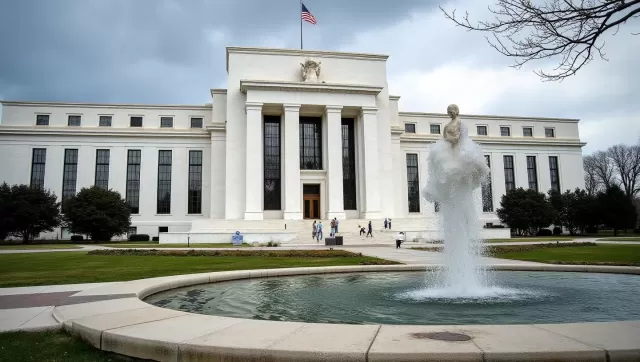
The U.S. central bank has implemented a widely expected 25-basis-point reduction in its benchmark interest rate. However, the decision was accompanied by a notable degree of internal disagreement and unexpected policy shifts that have left market watchers with several key points to consider.
A Cautious Cut with a Positive Market Reaction
In a move that could be described as a "hawkish cut," the Federal Reserve paired its rate reduction with strong cautionary signals. The messaging suggested that the threshold for any further monetary easing in the near future remains high. Despite this cautious stance, financial markets responded with optimism. On the day of the announcement, stock indexes recorded significant gains, and yields on Treasury securities declined.
A Divided Committee Signals Uncertainty
The 9-3 vote in favor of the rate cut revealed a significant level of division within the Federal Open Market Committee (FOMC), marking the highest number of dissents since September 2019. The opposition came from diverse perspectives and included an unexpected vote against the move from Chicago Fed President Austan Goolsbee. The dissenting opinions were varied:
- Governor Stephen Miran advocated for a more aggressive 50-basis-point cut.
- Chicago Fed President Austan Goolsbee favored maintaining the current rate.
- Kansas City Fed President Jeffrey Schmid also preferred to hold rates steady.
Beyond the official votes, it was noted that a total of six of the nineteen members expressed reservations. This highlights a broader sentiment among some officials that the current cycle of easing has progressed sufficiently for now.
Future Rate Projections Remain Steady
The "dot plot," which charts the individual rate forecasts of committee members, showed minimal changes for the upcoming years. The median projection indicates a patient approach, with just one rate cut anticipated in 2026 and another in 2027. The long-term outlook suggests the federal funds rate will eventually stabilize around a neutral level of 3%. While markets generally accepted this guidance, futures pricing indicated that investors still see a 38% probability of two rate cuts occurring next year.
A New Bill Purchase Program to Stabilize Markets
Beginning this Friday, the Federal Reserve will resume purchasing short-term government debt. The central bank announced a plan to buy $40 billion in Treasury bills each month. This initiative is not a return to broad-based bond buying, but a targeted effort to alleviate pressure in overnight funding markets and ensure the federal funds rate stays within its intended range. Some analysts interpret this program as a subtle form of monetary easing, potentially providing a boost to risk assets.
An Optimistic View on Economic Growth
Chair Jerome Powell, who has only three meetings remaining in his term, expressed a largely positive assessment of the U.S. economy, calling it "extraordinary." This upbeat sentiment was echoed by the committee's formal projections. Officials revised their outlook upward, increasing the forecast for 2026 gross domestic product (GDP) growth by half a percentage point to 2.3%.
Navigating an Uncertain Policy Path
Looking ahead, the path for monetary policy is clouded by several factors. The clear lack of consensus on the committee, combined with delays in the release of key economic data due to a recent government shutdown, makes the future difficult to predict. Furthermore, a new Federal Reserve Chair is expected to take the helm in early 2026, which could bring a shift in policy approach.
Some economists believe the Fed is likely to remain on hold for a period, with a higher bar for any rate cut in January given the upgraded growth expectations. However, others suggest that continued weakness in labor market indicators could still push the committee toward another quarter-point reduction early next year.