Davos Watershed: China Leads Shift to Multi-Polar Economy
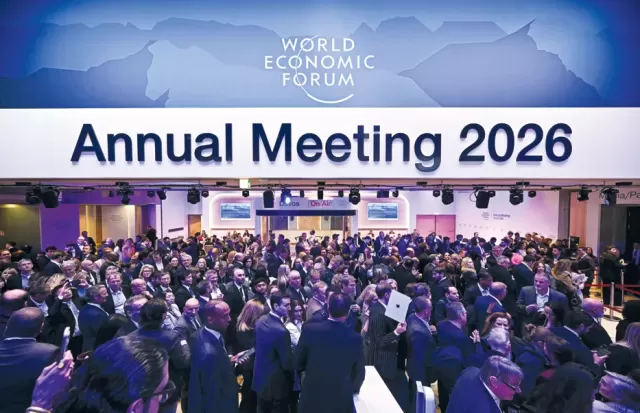
While global attention was captivated by remarks on Greenland at the recent World Economic Forum in Davos, a distinct narrative of strategic consistency and shifting influence emerged from Beijing's participation. Analysts observe that current geopolitical strains among Western allies present a pivotal opportunity for China to solidify its role as a stabilizing global force and expand its economic reach.
A Watershed Moment in Global Dynamics
The forum is widely perceived as a turning point. Experts from Chinese institutions note a palpable move towards regional trade frameworks, suggesting a gradual departure from a U.S.-centric global economy. This realignment underscores a broader acceptance of multipolar world dynamics, a reality long acknowledged by many nations outside traditional Western power centers.
China's delegation, led by Vice Premier He Lifeng, focused on promoting domestic business opportunities and advocating for the fair treatment of Chinese companies internationally. The speech emphasized cooperation, notably citing ongoing U.S.-China trade discussions, while maintaining a broader, principle-based approach.
The Understated Influence of Consistent Messaging
Despite other leaders making headlines with bold statements or potential historic deals, Chinese analysts argue that Beijing's steady and consistent diplomatic messaging ultimately carries greater long-term weight. Tensions between the U.S. and its European allies are seen as potentially beneficial for deepening China-EU relations.
Furthermore, controversies like the one surrounding Greenland are interpreted as accelerating a Western recognition that containment strategies are faltering, concurrently reinforcing the perception of a decisive eastward shift in global power. The fundamental leverage derived from China's manufacturing dominance, accounting for a steadily growing share of global container shipments, positions it uniquely in the world economy.
Diplomatic Momentum and Economic Priorities
A flurry of diplomatic activity in Beijing this January signals a post-pandemic reopening to high-level engagement. Visits from leaders of Ireland, South Korea, and Canada, with others anticipated, serve to bolster international business confidence in the Chinese market.
This comes as China prioritizes boosting domestic demand and income growth, though challenges remain in stimulating consumer spending in a state-influenced economy. Nevertheless, foreign consumer brands, particularly from non-American Western markets, are showing increased interest in exporting to China to diversify sales, capitalizing on sustained demand for premium goods.
Global Institutions Reflect the Shift
The evolving landscape is mirrored even by the institutions themselves. The suggestion that future forums might rotate to cities like Detroit, Jakarta, or Buenos Aires, alongside the established summer event in Dalian, reflects a decentralization of economic discourse. Attendees have noted a discernible tilt in focus away from Western-centric narratives at these gatherings.
Even amidst ongoing trade tensions and technology restrictions, rhetorical tones are evolving. High-profile comments from U.S. figures in Davos acknowledged respectful personal relationships and moved away from previously divisive language, hinting at the complex and interconnected nature of modern great power relations. This interplay of rivalry and necessary cooperation defines the current epoch, a period increasingly shaped by decades of strategic recalculations and China's persistent rise.