Parrots Unveil a New Locomotive Technique: Beakiation
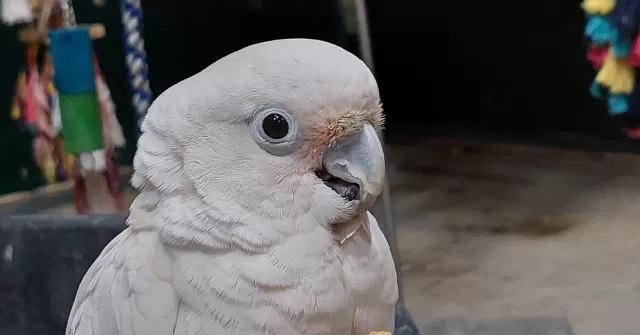
In a pioneering study recently published in the Royal Society Open Science, scientists have unveiled a novel locomotive technique employed by parrots, shedding light on the incredible versatility of these birds' beaks. Referred to as "beakiation," this innovative gait challenges conventional notions of parrot locomotion, demonstrating their adaptability in navigating challenging terrains.
Leading the research team was biomechanist Michael Granatosky, associated with the New York Institute of Technology. The team delved into investigating the locomotive capabilities of four rosy-faced lovebirds (Agapornis roseicollis) to comprehend how parrots navigate narrow branches and intricate environments, exploring their potential responses when encountering unconventional challenges.
The experiment involved suspending the lovebirds on a mere 2.5-millimeter-diameter bar, simulating the difficulty of navigating narrow branches in their natural habitats. Remarkably, the parrots spontaneously devised a unique locomotion strategy, termed "beakiation." This technique involved the birds hanging upside down, gripping the bar with their beaks, and employing a cyclical side-swinging motion with their bodies, effectively shuffling along the precarious surface.
NYIT biomechanist Edwin Dickinson emphasized, "This wasn't something that the parrots were trained to do. This was an innovative solution to a novel problem." The discovery underscores the cognitive abilities of parrots, reinforcing their reputation as intelligent and adaptable creatures.
To unravel the intricacies of beakiation, the researchers segmented the bar into three pieces, with the central segment equipped to measure force. Through meticulous data recording across 129 strides, they calculated the gait's energy efficiency. The findings indicated that, on average, parrots recovered only about 24 percent of the energy expended during the beakiation process.
In contrast, the energy recovery in beakiation sharply contrasts with the highly efficient brachiation observed in gibbons (Hylobatidae), where these primates recover nearly 80 percent of the energy expended during their swift and smooth swinging between branches.
Biomechanist David Lee from the University of Nevada, Las Vegas, who was not part of the study, remarked, "I see this as one of many different beak-assisted gaits that parrots use." Parrots, accustomed to dense forest habitats where flying may be challenging, exhibit a diverse range of locomotive techniques. Lee highlighted the birds' constant navigation of complex 3D environments, where vines and fine branches often serve as their primary means of travel.
The discovery of beakiation enhances our understanding of parrots' adaptive behaviors, further solidifying their position as remarkable problem solvers in the animal kingdom. As researchers continue unveiling the intricacies of avian locomotion, this newfound insight into beakiation sets the stage for future studies on the diverse and ingenious ways in which birds navigate their environments.